
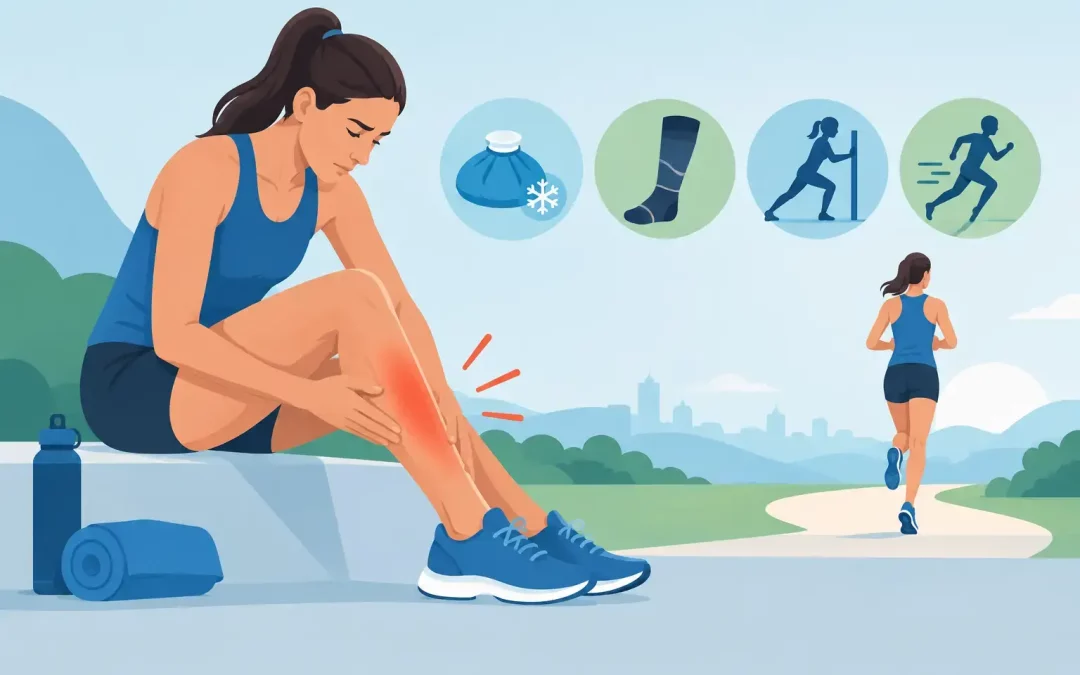
That ache along the inside edge of your shin may start as an annoyance during a run, practice, or workout. Keep pushing through it, and it can become the pain that changes your stride, shortens your training, and keeps you out of the activities you love. Knowing how to treat shin splints means doing more than taking a few days off. The goal is to calm the irritated tissue, identify why it was overloaded, and rebuild your capacity so you can get back in the game without repeating the same cycle.
Shin splints are often called medial tibial stress syndrome. They typically cause a broad, tender area along the inner border of the tibia, or shinbone. This is common in runners, soccer players, court athletes, hikers, and anyone who has recently increased mileage, intensity, hills, jumping, or training frequency.
How to Treat Shin Splints Without Losing All Your Fitness
The first move is not necessarily complete inactivity. It is smart load management. If running, cutting, or jumping creates pain that worsens during the workout or lingers afterward, reduce or pause those impact activities temporarily. Continuing to run through escalating shin pain can turn a manageable overuse injury into a longer recovery problem.
You can often maintain conditioning with lower-impact options such as cycling, swimming, deep-water running, or an elliptical, as long as they do not reproduce your symptoms. This matters for athletes who are in season and active adults who rely on exercise for their physical and mental health. We are all athletes, and a treatment plan should respect that.
Ice can help reduce pain after activity, particularly during the first few days of a flare-up. Use it for short sessions with a barrier between the ice and skin. Over-the-counter anti-inflammatory medicine may be appropriate for some people, but it is not a green light to keep training on an injured leg. If you take medication regularly, have kidney, stomach, bleeding, or heart concerns, ask your physician or pharmacist before using it.
The key is to make activity decisions based on symptoms, not just determination. Mild discomfort that stays stable and resolves quickly may be manageable during a gradual return. Sharp pain, limping, pain at rest, or pain that intensifies from one workout to the next means your shin needs more protection and a closer evaluation.
Find the Training Error Behind the Pain
Shin splints rarely appear for no reason. In many cases, the body has been asked to absorb more force than it is currently prepared to handle. A runner may add distance and speed in the same month. A soccer player may move from off-season workouts to multiple practices on firm fields. A student athlete may begin a new season after a summer of less structured training.
Look at the previous two to four weeks. Did your total mileage jump? Did you add hill repeats, speed sessions, plyometrics, or extra games? Have you switched to a harder running surface, changed shoes, or started wearing cleats more often? Even a new job with more time on your feet can add to the load.
When symptoms settle, return to impact gradually. Start with shorter, easier sessions and give your shin time to respond before increasing volume. Avoid stacking demanding workouts on consecutive days early in recovery. There is no universal timeline because recovery depends on pain severity, bone health, training history, mechanics, and whether the injury is truly shin splints rather than a stress fracture.
Rebuild the Strength That Absorbs Impact
Rest alone may quiet shin pain, but it does not automatically correct the weakness or movement pattern that contributed to it. A strong return-to-sport plan usually includes targeted work for the calf, foot, ankle, hips, and trunk.
Calf strength is especially important because the calf complex helps control the ankle and absorb force every time you land. Begin with controlled double-leg calf raises if they are comfortable, then progress to single-leg raises. Slow lowering phases can be useful because they build the tissue’s ability to handle load. Foot-strengthening exercises, balance drills, and ankle mobility work can also improve control from the ground up.
Do not ignore the hips. Weakness or poor control at the hip can allow the knee and lower leg to drift inward during landing and running. That can increase stress farther down the chain. Single-leg squats, step-downs, bridges, and side-lying hip work are common parts of a sports-focused program, but exercise selection should match your movement and symptoms.
Form matters too. Overstriding, excessive inward collapse of the foot, limited ankle motion, and fatigue-related changes can all affect how force travels through the shin. A gait analysis can identify issues that are difficult to spot on your own, especially when pain returns despite cutting back on training.
Check Your Shoes, Cleats, and Support
Your footwear will not solve every case of shin splints, but it can contribute to the problem. Running shoes that are worn down, too soft for your needs, too stiff, or poorly matched to your foot and training surface may change how your lower leg handles impact. Cleats deserve the same attention. They are less forgiving than running shoes, and the wrong fit or stud configuration can affect comfort, traction, and lower-leg load.
Some athletes benefit from custom orthotics or other shoe modifications when foot mechanics are a major factor. Orthotics are not a substitute for strength training or sensible progression. They are a tool that may help distribute forces more effectively while you address the bigger picture.
A sports medicine podiatrist can assess foot structure, ankle motion, footwear wear patterns, and gait to determine whether support is likely to help. The right recommendation depends on the athlete, the sport, the surface, and the underlying mechanics.
When Shin Splints Could Be Something More Serious
Not every pain along the shin is a simple overuse problem. A stress fracture can initially feel similar, but it needs a different level of protection and a more cautious return plan. The concern rises when pain is concentrated in one small spot rather than spread across a larger area of the shin.
Seek an evaluation promptly if you have any of the following:
- Pain at rest, at night, or during normal walking
- A pinpoint area of bone tenderness
- Swelling, bruising, or a noticeable limp
- Pain that is getting worse despite reducing activity
- Numbness, weakness, tightness, or unusual color changes in the foot
These symptoms do not automatically mean you have a stress fracture or another serious condition, but they should not be managed by guesswork. Imaging and a focused exam may be needed to distinguish shin splints from a bone stress injury, exertional compartment syndrome, tendon problems, or another cause of lower-leg pain.
Get a Plan Built for Your Sport and Goals
The fastest path back is not always the fastest return to running. It is the plan that lets injured tissue recover while preserving the fitness and strength you need to perform. For some people, that means a short period of reduced impact followed by a structured run-walk progression. For others, persistent symptoms call for a more detailed biomechanical assessment, physical therapy, custom orthotics, or advanced treatment options.
At Colorado Center for Podiatric Sports Medicine, the focus is on identifying the source of the overload and creating a recovery plan that fits your sport, schedule, and goals. That may include gait analysis, footwear or soccer cleat evaluation, custom devices, strength guidance, and physician-directed treatments when appropriate.
Your shin pain is useful information, not a challenge to tough out. Respond early, train intelligently, and give your body the support it needs to carry you confidently into the next mile, match, hike, or workout.

Recent Comments