
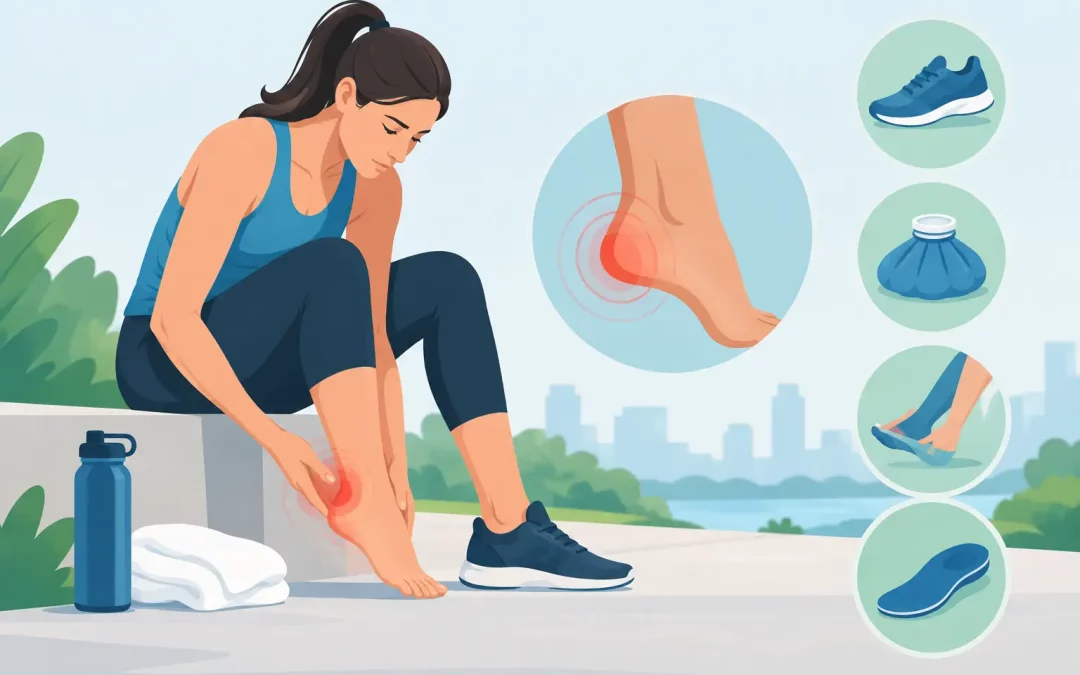
The first few steps out of bed should not feel like a test of willpower. Yet for runners, soccer players, gym regulars, and active adults across the Front Range, heel pain often shows up there first: a sharp jab under the heel that eases after a few minutes, then returns after training, work, or a long day on your feet. That pattern is common, but it is not something you need to push through indefinitely.
Your heel absorbs force every time you walk, jump, cut, climb, or land. When pain develops, the right response is not automatically to stop moving. It is to identify what tissue is irritated, why it is overloaded, and how to keep you active without turning a manageable problem into a longer injury.
Why Heel Pain Is Not One Diagnosis
The heel is a small area with a lot happening around it. The plantar fascia, Achilles tendon, heel bone, fat pad, nerves, joints, and surrounding muscles can all create pain in or near the heel. Location, timing, training history, footwear, and the way you move each provide useful clues.
Plantar fasciitis, more accurately called plantar fasciopathy when it becomes persistent, is one of the most common causes. The plantar fascia is a strong band of tissue that runs from the heel toward the toes. It can become painful when repeated loading exceeds its capacity. Classic symptoms include pain on the bottom of the heel with first steps in the morning or after sitting, followed by soreness that may build again with prolonged activity.
Pain at the back of the heel is more likely to involve the Achilles tendon, its attachment to the heel bone, or irritation from a stiff shoe counter. Athletes may notice this during acceleration, hill running, jumping, or after a recent increase in volume. Pain directly in the center of the heel can point to a bruised or worn fat pad, especially when hard surfaces and thin-soled shoes are part of the picture.
Less common causes matter because they require a different plan. A heel stress fracture may cause progressively worsening pain with impact and tenderness when the heel is squeezed from the sides. Nerve irritation can create burning, tingling, or electrical symptoms. Inflammatory conditions can affect both heels or occur with stiffness and symptoms in other joints.
That is why a generic internet diagnosis can be costly. Two people can call it heel pain while needing entirely different training modifications and treatment plans.
When Heel Pain Needs Prompt Evaluation
Not every sore heel is an emergency, but certain symptoms should move an evaluation higher on the priority list. Seek care promptly if you cannot bear weight, felt a pop, have significant swelling or bruising, develop numbness, or have pain that is severe at rest or wakes you from sleep.
Progressively worsening pain after a jump in running mileage, tournament play, hiking, or work demands deserves attention as well. Stress injuries can initially feel like a minor ache. Continuing to load them aggressively can turn a shorter recovery into a much longer one.
If your heel pain has persisted for more than a few weeks, keeps returning when you resume activity, or is changing your gait, it is also time for a focused assessment. Limping to protect one area can transfer stress to the knee, hip, opposite foot, or lower back.
The Training Errors Behind Many Heel Problems
Heel pain is rarely caused by one bad workout. More often, it develops when the load placed on the foot changes faster than your body can adapt. That can happen after adding speed work, returning to a sport season, increasing court time, switching terrain, or replacing shoes with a different style.
The problem is not always simply doing too much. Sometimes it is doing too much of one type of load. A runner may tolerate easy miles but react to hills. A soccer player may feel fine in training shoes but develop symptoms in cleats, where the sole is stiffer and the foot position changes. Someone who works on concrete may be able to exercise comfortably but hurt after standing all day.
Footwear can contribute, but there is no single “best shoe” for every heel. A highly cushioned shoe may help one person while an overly flexible shoe aggravates another. Worn-out midsoles, abrupt changes in heel height, and shoes that rub the back of the heel can all influence symptoms. The goal is to match footwear to your foot, activity, and injury rather than chasing a trend.
Calf strength, ankle mobility, hip control, foot mechanics, and recovery all matter too. Tightness alone does not explain every case, and stretching alone does not fix every case. A good plan looks at the full chain of movement.
What to Do While You Arrange Care
You do not need to prove toughness by training through sharp pain. At the same time, total inactivity is not always necessary or helpful. The better approach is to reduce the movements that clearly flare symptoms while maintaining fitness with activities your heel tolerates.
For example, a runner with painful morning steps may temporarily replace some impact sessions with cycling, swimming, or strength work. A field athlete may reduce sprinting and cutting before eliminating every form of conditioning. The details depend on the diagnosis and pain level, but the principle is consistent: protect the irritated tissue while keeping the rest of the athlete moving.
Supportive shoes can be useful during a flare, including around the house if barefoot walking is painful. Avoid aggressively digging into the bottom of the heel with a hard ball or massage device. That may feel productive, but excessive pressure can make an already irritated area more sensitive.
Gentle calf and foot mobility may help some people, particularly when it does not increase pain. Ice can provide short-term symptom relief after activity, though it does not address the underlying reason the pain started. Over-the-counter anti-inflammatory medication may be appropriate for some patients, but it is not right for everyone and should not be used to mask pain so you can continue an aggravating workload.
How a Sports-Medicine Evaluation Changes the Plan
A heel evaluation should go beyond pressing on the painful spot. The clinician should identify precisely where symptoms occur, review your training changes, assess footwear, and examine strength, flexibility, joint motion, and walking or running mechanics. Depending on the findings, imaging may be used to evaluate the heel bone, plantar fascia, Achilles tendon, or other structures.
This is especially valuable for athletes who have already tried the usual advice with limited success. If a condition has been labeled plantar fasciitis for months but pain is actually coming from a stress injury, nerve, or Achilles attachment, repeating the same treatment will not get you back in the game.
At Colorado Center for Podiatric Sports Medicine, treatment is built around the diagnosis and your activity goals. That may include a targeted loading program, temporary activity modification, gait analysis, custom orthotics when appropriate, footwear or cleat recommendations, and hands-on strategies to improve how the foot and ankle tolerate force.
For stubborn cases, advanced options such as EPAT shockwave therapy or MLS laser therapy may be considered as part of a larger treatment plan. These tools are not substitutes for correcting the loading and biomechanical factors behind the problem. They are options that can support recovery in the right patient at the right stage.
Building Back to Activity Without Restarting the Cycle
Pain reduction is a milestone, not the finish line. The more meaningful goal is restoring the capacity to walk, work, train, and compete without symptoms returning the moment you increase intensity.
A gradual return should account for the activity that caused the issue. A runner may need to rebuild easy mileage before adding hills or intervals. A basketball or soccer player needs to progress through jogging, acceleration, deceleration, jumping, and cutting rather than jumping directly into full-speed competition. Strength work often includes the calf, foot, ankle, and hips because the heel does not operate in isolation.
Use your response over the next 24 hours as feedback. Mild discomfort that settles quickly may be acceptable in some rehabilitation plans. Pain that escalates during activity, changes your mechanics, or is noticeably worse the next morning usually means the load was too high. This is where an individualized plan beats a rigid calendar.
Heel pain can make an active person feel sidelined fast. Clear answers, smart loading, and a plan built around the sport or movement you care about can change the trajectory. Your goal is not just to get through the next workout. It is to make each step, stride, and landing feel reliable again.

Recent Comments