
That first step out of bed should not feel like landing on a nail. If heel pain is changing your running route, cutting a workout short, or making a full day on your feet feel impossible, EPAT shockwave therapy plantar fasciitis treatment may be worth discussing with a sports-minded podiatrist. The goal is not simply to quiet pain for a few days. It is to address a stubborn injury, rebuild your ability to load the foot, and get you back in the game safely.
Why plantar fasciitis can linger
Plantar fasciitis involves irritation and degeneration in the plantar fascia, the thick connective band that supports the arch and runs from the heel toward the toes. It commonly causes sharp pain at the inside-bottom of the heel, especially with the first few steps after rest. The pain may ease once you move around, then return after a long practice, shift, hike, or training session.
For active people, the frustrating part is that plantar fasciitis rarely has one simple cause. A sudden jump in running mileage, hard playing surfaces, worn shoes, tight calves, limited ankle motion, foot mechanics, or a demanding job can all contribute. Sometimes the pain starts after one clear change. Other times, it builds gradually until every step becomes a negotiation.
Rest can calm symptoms, but rest alone does not always correct the load-management or biomechanical problem that allowed the tissue to become overloaded. That is why a precise diagnosis matters. Heel pain can also come from a stress injury, nerve irritation, fat-pad problems, Achilles-related conditions, or inflammatory disease. Treating the wrong cause is a fast way to lose more training time.
What is EPAT shockwave therapy?
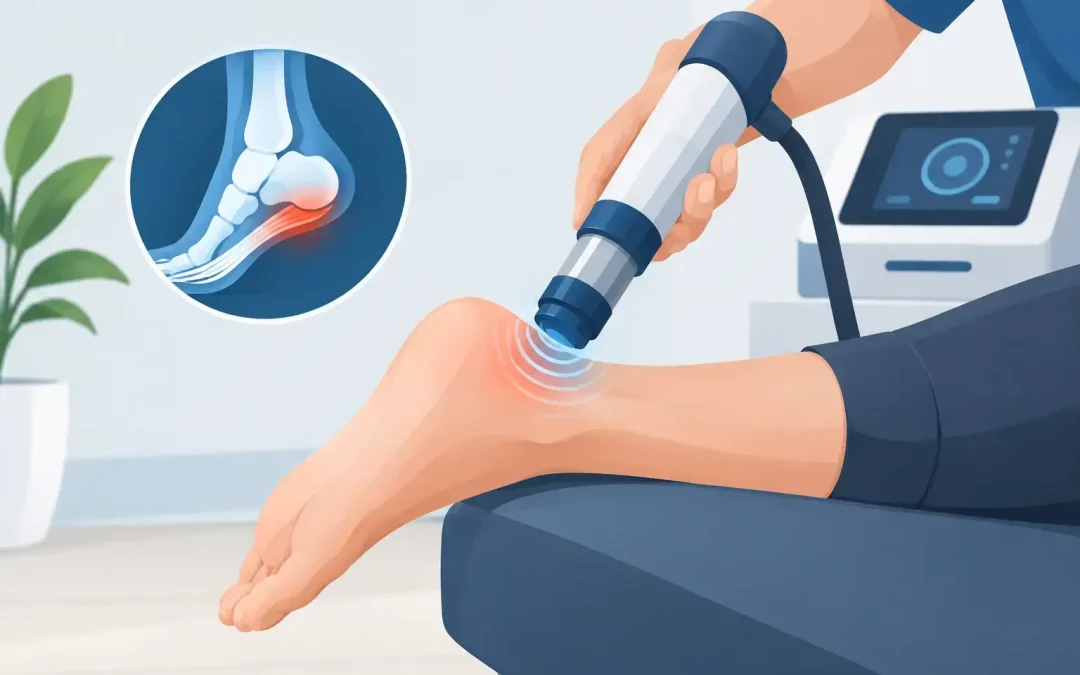
EPAT stands for Extracorporeal Pulse Activation Technology. It is a noninvasive treatment that delivers acoustic pressure waves through the skin to the painful area. During a session, a clinician applies gel and moves a handheld device over the heel and plantar fascia attachment.
The treatment is designed to stimulate the body’s healing response in chronically irritated tissue. The mechanical pulses may promote local circulation and cellular activity while helping disrupt the cycle of persistent pain. EPAT is not surgery, does not involve injections, and typically does not require anesthesia.
For plantar fasciitis that has not improved with appropriate conservative care, shockwave treatment can be a valuable part of a broader recovery plan. It is not a magic shortcut, and it works best when the rest of the plan is just as intentional: activity modification, calf and plantar fascia mobility work, supportive footwear, strengthening, and, when needed, custom orthotics or gait guidance.
What an EPAT session feels like
Most treatments are brief, often lasting only several minutes per foot. You will feel repeated tapping or pulsing at the treatment site. The intensity can be adjusted, and the experience is generally tolerable, though a very tender heel may be uncomfortable during the first session.
Some people notice mild redness, temporary soreness, or bruising afterward. These effects are usually short-lived. Unlike a treatment that depends on numbing the area, EPAT allows the care team to monitor how the heel responds and adjust your return-to-activity plan accordingly.
When EPAT shockwave therapy for plantar fasciitis makes sense
EPAT is often considered when heel pain has persisted despite a well-executed conservative program. That may include a period of reduced impact activity, targeted stretching, strengthening, shoe changes, anti-inflammatory measures when appropriate, physical therapy, or orthotic support.
The best candidates are not defined by a single number of painful weeks. A recreational runner with months of worsening heel pain despite smart training changes may be a candidate. So may a teacher, healthcare worker, warehouse employee, or parent whose daily steps keep the tissue irritated. We are all athletes when our feet have work to do.
At Colorado Center for Podiatric Sports Medicine, the decision begins with an examination of the whole movement picture. The foot is not separate from the calf, ankle, hip, training load, shoes, or sport. A runner with limited ankle dorsiflexion needs a different plan than a soccer player whose cleats are compressing the forefoot and changing how they push off. The technology matters, but the diagnosis and plan around it matter more.
EPAT may not be the right choice for everyone. Your podiatrist will review your medical history, medications, circulation, sensation, and the possibility of other conditions before recommending treatment. Certain situations, including some clotting concerns, pregnancy, active infection, or a suspected fracture, require a different approach or added caution.
What recovery looks like after treatment
A common mistake is assuming that less pain after a treatment means the foot is ready for full-speed training. Plantar fascia tissue needs progressive loading. That means returning to impact in stages, based on symptoms, strength, and the demands of your activity.
Many patients continue normal daily activity with modifications, but the right level of exercise depends on the severity and duration of the condition. Walking, cycling, swimming, strength training, or controlled low-impact conditioning may help you stay active while the heel settles. A runner may need to temporarily replace speedwork or hills. A field athlete may need to limit sprinting and cutting before returning to full practice.
Improvement is usually measured over weeks, not overnight. Some people feel a change quickly, while others improve gradually as the tissue responds to treatment and better load management. A good plan sets clear checkpoints: less morning pain, improved tolerance for standing and walking, better calf flexibility, stronger foot control, and a gradual return to sport-specific work.
The work between appointments matters
EPAT can support healing, but it cannot compensate for the same training error repeating every week. Your care plan may include calf stretches, plantar fascia-specific mobility, intrinsic foot strengthening, balance work, and hip or ankle exercises. These are not busywork. They help the foot absorb force more effectively when you run, cut, jump, climb, or stand for hours.
Footwear also deserves an honest look. A shoe that is worn out, too flexible, too narrow, or poorly matched to your activity can keep the heel under stress. The answer is not always the most cushioned shoe on the wall. The right choice depends on your mechanics, activity, foot shape, and current symptoms.
Questions active patients ask about EPAT
Will I have to stop exercising?
Not necessarily. The objective is often to keep you moving without repeatedly provoking the injury. Your clinician can help identify which activities are safe now and which should wait. Staying conditioned with smart substitutions is very different from pushing through escalating heel pain.
Is EPAT better than a cortisone injection?
They are different tools with different goals and risks. An injection may be considered in select cases, but it is not automatically the best first answer for an active patient. EPAT is noninvasive and aims to support a healing response without placing a needle into the plantar fascia. The right choice depends on the diagnosis, tissue condition, symptom severity, and your recovery goals.
Can plantar fasciitis come back?
Yes, especially if the underlying overload returns. That does not mean you are destined to live with heel pain. It means prevention needs to be part of the plan: build training gradually, maintain calf and foot strength, replace worn footwear, and respond early when familiar symptoms show up.
Persistent heel pain is a signal, not a character test. Get it evaluated, train around it intelligently, and give your feet the same focused care you give the rest of your performance.

Recent Comments